Group Transportation With Tailgate Equipment: A Planning Guide
Quick answer
To arrange group transportation with tailgate equipment, provide the passenger count and an itemized gear list with packed dimensions before choosing a vehicle. Ask the transportation provider to confirm which items it accepts and whether everything fits safely with all passengers seated. Check the venue’s current tailgating, parking, and loading rules separately. Confirm who handles the equipment, where it stays during the event, and how it returns afterward; do not assume a passenger transfer includes parking or equipment storage.
Table of Contents
- Count passengers and measure packed equipment
- Confirm which items the transportation provider accepts
- Choose the vehicle after reviewing the complete load
- Check venue access and tailgating arrangements
- Decide where equipment stays during the event
- Plan loading time and the return pickup
- Submit one complete transportation request
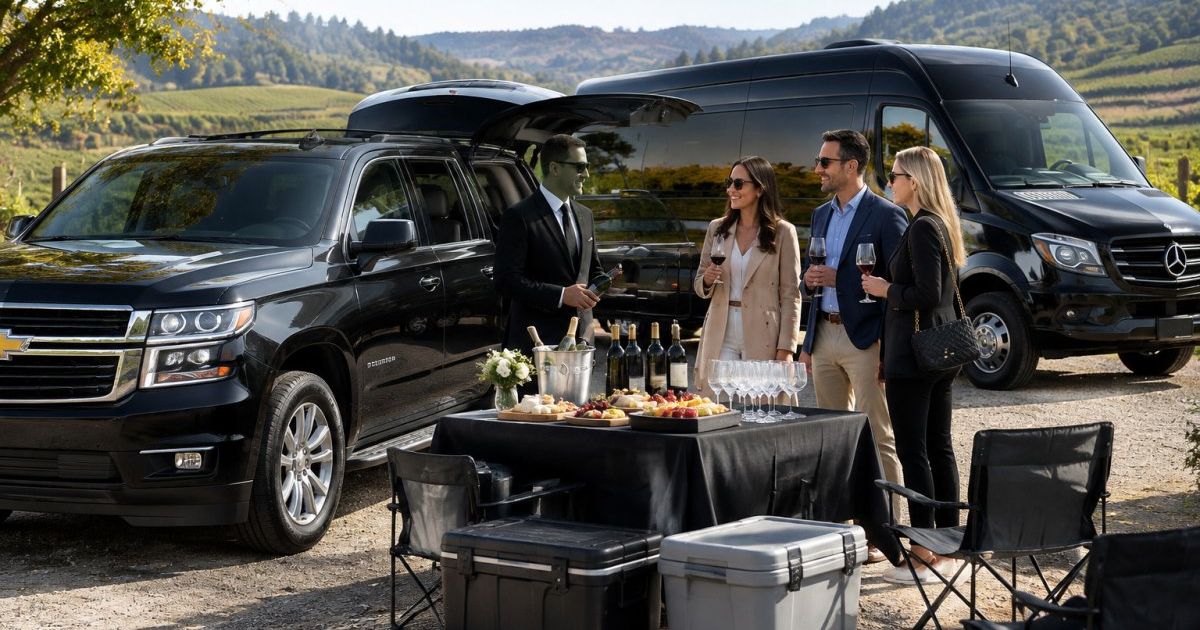
A group traveling with tailgate equipment needs more than enough passenger seats. Coolers, folded chairs, tables, and other gear must be reviewed alongside the people who will ride.
Prepare the equipment list before requesting a vehicle, then confirm acceptance, fit, venue access, and the return arrangement. A passenger transfer should not be assumed to include tailgate parking, equipment storage, or a vehicle waiting throughout the game.
Count passengers and measure packed equipment
Count every traveler, including children, and include personal bags alongside shared equipment.
Measure items as they will actually travel: folded, packed, or inside their carrying cases. A canopy’s setup dimensions do not explain the space needed for its packed frame.
Use this inventory:
- Passenger count and personal bags.
- Coolers: quantity, exterior dimensions, and approximate loaded weight.
- Folding chairs: quantity and packed dimensions.
- Tables: folded size and quantity.
- Canopies: packed frame, fabric, and case dimensions.
- Food containers: quantity and how they will be closed.
- Other equipment: description, dimensions, and handling requirements.
List grills or other cooking equipment separately for review rather than treating them as accepted cargo. Photos can help explain unusual items, but dimensions and acceptance still need confirmation.
Assign one person to collect the information from the group. Several guests each bringing an unreported cooler can change the load significantly.
Confirm which items the transportation provider accepts
Venue permission and transportation-provider acceptance are separate checks. An item allowed in a tailgating area may still be unsuitable for the assigned passenger vehicle.
Disclose cooking equipment, fuel or gas cylinders, sharp components, leaking containers, and anything that could leave heat, odors, dirt, or residue. Obtain explicit instructions before bringing such items.
Do not bring lit, hot, or smoldering equipment. If an item is not accepted, leave it behind or arrange an appropriate alternative separately.
Ask how accepted equipment should be packed and who will handle it. Keep containers closed and report heavy or awkward items before pickup so handling requirements can be reviewed.
The operator determines the loading and securing arrangement for the assigned vehicle. Passengers should not plan to place bulky gear on occupied seats, obstruct access, or improvise a cargo layout at departure.
Choose the vehicle after reviewing the complete load
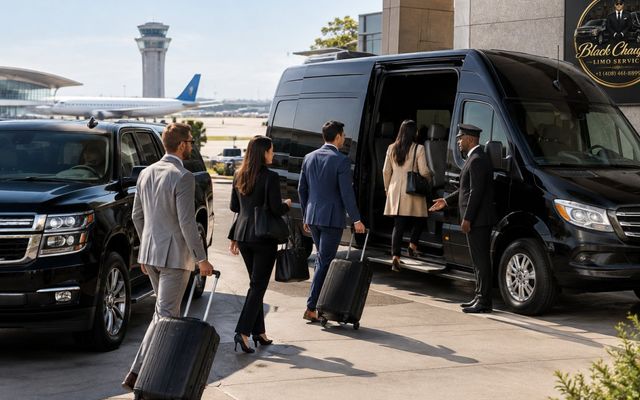
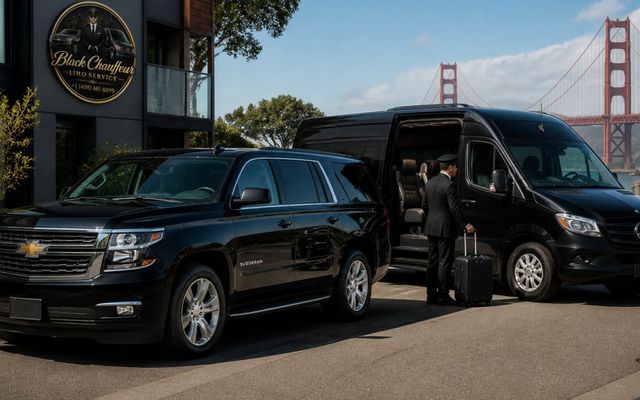
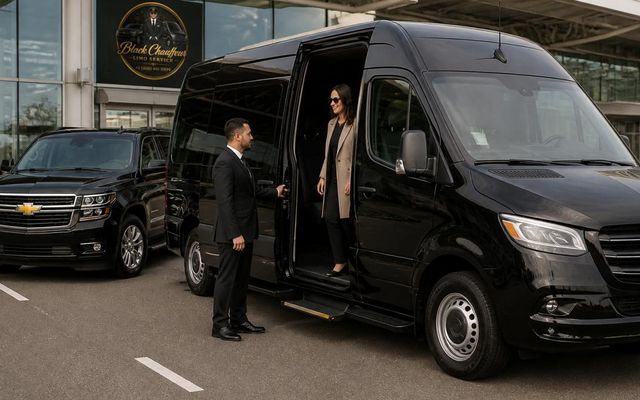
Black Chauffeur Limo Service’s direct fleet includes the Lincoln Aviator, Chevrolet Suburban LT, and Mercedes-Benz Sprinter passenger van.
An SUV may suit a smaller party, while a Sprinter may be considered for a larger group. Neither choice should be finalized from headcount alone.
Review the SUV and Sprinter passenger-and-cargo arrangements, then submit your inventory for an assessment of the actual vehicle.
Sprinter passenger tiers cover up to six, seven to ten, or eleven to fourteen travelers, subject to confirmation. These tiers share physical vehicle availability; they do not promise separate vans or a particular amount of cargo room.
There is no reliable rule that one cooler or canopy equals a certain number of passenger seats. Equipment size, shape, weight, and the vehicle’s actual arrangement all matter.
If the accepted load cannot fit safely with the passengers, discuss reducing equipment or arranging another suitable solution. Do not assume additional vehicles are available at short notice.
Check venue access and tailgating arrangements
Confirm the current rules for the specific venue and event. Tailgating permission, parking eligibility, and passenger loading access may involve different locations or conditions.
Ask the venue or event organizer:
- Is tailgating permitted for this event?
- Which areas permit the planned activities and equipment?
- Is a parking pass required, and is it valid for the proposed vehicle?
- Where may passengers and equipment be unloaded?
- Are there restrictions on vehicle size, re-entry, or waiting?
- How will equipment reach the tailgating area from the authorized drop-off?
Share those instructions with the reservation team before accepting the itinerary.
A passenger drop-off does not necessarily provide access to a tailgating lot. Likewise, an event ticket does not establish that the chauffeur vehicle has suitable parking permission.
For the broader service overview, review the event transportation and return-planning options.
Decide where equipment stays during the event
Resolve the equipment’s location before booking the outbound ride.
If the vehicle leaves after drop-off, guests need an accepted plan for everything they brought. Equipment cannot automatically remain in a released vehicle or be brought inside the venue.
If you want the vehicle retained, request that service explicitly. Confirm the reserved hours, parking arrangement, whether equipment storage is accepted, and when access to it will be available.
Do not assume retained service means continuous access at the stadium entrance or that the chauffeur provides tailgate setup, cleanup, or security.
Plan for the condition of equipment after use. Wet chairs, dirty frames, leaking coolers, or cooking residue may require different packing or may not be accepted for the return. Agree on that before departure.
Plan loading time and the return pickup
Choose one lead contact who can confirm that the entire party and accepted equipment are ready.
Allow time at the initial pickup to review the load and board. If travelers join at several addresses, list those stops in order and identify which equipment boards at each one.
For the return, confirm:
- The permitted meeting location.
- Requested pickup time or agreed coordination process.
- Lead passenger’s reachable mobile number.
- Passenger count and destination stops.
- Who packs and carries the equipment to pickup.
- How changes or delays should be reported.
The outbound drop-off and post-event pickup may be different locations. Follow the accepted event-day instructions and coordinate any change before moving the group.
Review the reservation conditions for waiting, changes, and vehicle care, including trip-specific arrangements in the confirmation.
Submit one complete transportation request
Send the event name, date, venue, pickup addresses, passenger count, equipment inventory, requested arrival time, and return plan together.
State whether you need separate transfers or retained hourly service. Include venue access instructions and any parking-pass requirements for review.
Request transportation 12–24 hours ahead whenever possible, with additional notice for busy event dates, larger groups, or unusual equipment. Advance notice supports planning; a suitable vehicle and chauffeur still require confirmation.
Use the group event transportation request page to submit the complete itinerary. A preliminary quote or form receipt is not final acceptance of the trip or equipment.
Before sharing the plan with the group, check that the reservation confirmation covers the vehicle arrangement, accepted items, service period, loading instructions, and return journey.
Call: +1 (408) 461-8899. Text and WhatsApp: +1 (408) 394-3575.
How can you plan your chauffeur transportation?
Frequently asked questions
- How do you transport a group with tailgate equipment?
- Provide the passenger count and a complete equipment inventory with packed dimensions and approximate weights. The transportation provider must confirm accepted items, vehicle fit, and handling arrangements. Check venue access separately, and agree on where the equipment stays during the event and how it returns afterward.
- What vehicle size should I choose for a group with tailgate gear?
- Choose only after the reservation team reviews passengers and equipment together. An SUV may suit a smaller party, while a Sprinter may be considered for a larger group. Maximum seating capacity does not guarantee cargo space, and passenger tiers do not establish how much equipment will fit.
- How should a group coordinate pickup and drop-off for a game?
- Confirm the authorized unloading and return pickup locations, venue access requirements, timing, and lead passenger’s contact details. Allow time for equipment handling and boarding. Do not assume the vehicle can enter a tailgating lot, remain parked, or return to the same location without an accepted arrangement.
- What information should I provide when booking group transportation for an event?
- Include the event, date, venue, pickup addresses, passengers, packed equipment dimensions, handling needs, requested arrival time, and return itinerary. Identify any parking-pass requirements and explain whether the vehicle should remain reserved. Equipment acceptance and transportation arrangements must be confirmed before travel.