
Outsourced Executive Transport vs In-House Fleet
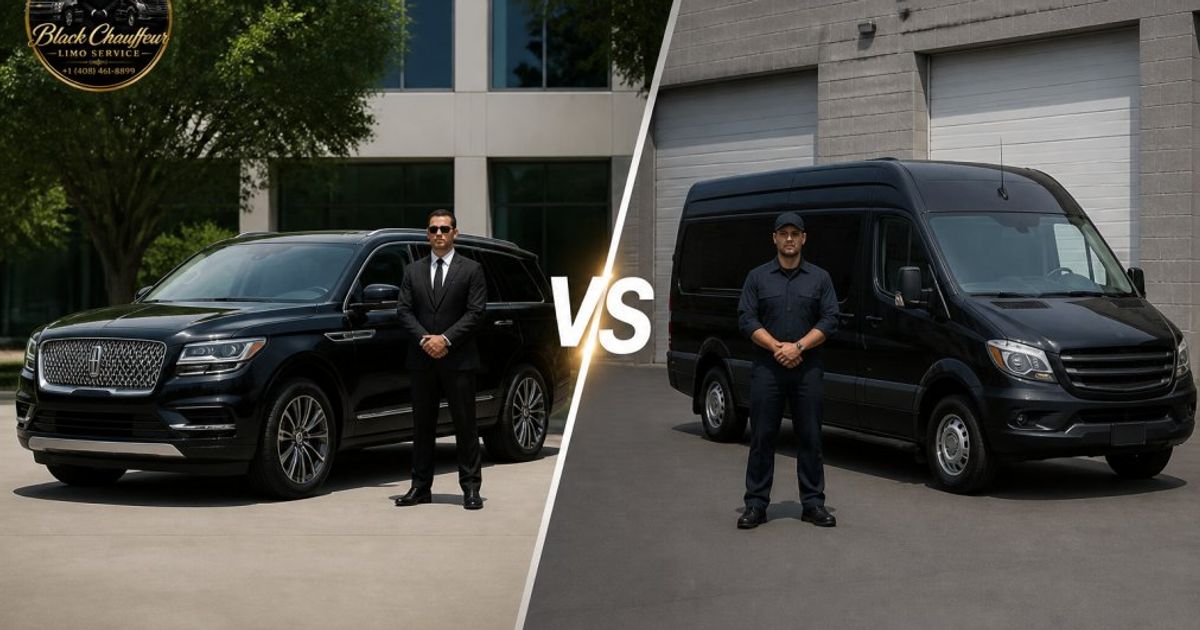
Quick answer
Outsourcing executive transportation is often more cost-effective and flexible than maintaining an in-house fleet. Companies can reduce vehicle, staffing, maintenance, insurance, and administrative costs while gaining access to professional chauffeurs and a wider range of vehicles. An in-house fleet may provide greater control, but outsourcing can simplify corporate transportation and scale more easily with demand.
Table of Contents
- Outsourced Executive Transport vs In-House Fleet: A Direct Comparison
- Side-by-Side Comparison Table
- Total Cost of Ownership: What Each Model Actually Costs
- Capital Expenditure and Ongoing Operational Expenditure
- Vehicle Depreciation, Maintenance, and Fuel Management
- Risk Management, Liability, and Duty of Care
- Executive-Specific Security Protocols
- Scalability, Asset Use, and Operational Agility
- Corporate Travel Logistics Best Practices for Each Model
- Fleet Telematics, Dispatch Efficiency, and Compliance
- Corporate Roadshow Transportation Planning: Outsourced vs In-House
- Sustainability, Carbon Reporting, and the Hybrid Approach
- How to Choose the Right Executive Transport Model
- Frequently Asked Questions
Last Updated: September 2, 2026
Outsourced Executive Transport vs In-House Fleet
Corporate travel coordinators face a structural decision when managing executive transportation: build and operate a private fleet, or contract with a professional chauffeur service? The answer depends less on company size than most guides suggest, and more on how you weigh capital exposure, operational control, and duty of care.
This guide breaks down both models across total cost of ownership, risk and liability, scalability, security protocols, and sustainability reporting, so you can make a defensible decision for your organization.
Outsourced Executive Transport vs In-House Fleet: A Direct Comparison
Outsourced executive transport is contracting a licensed, pre-arranged chauffeur or ground transportation provider to handle executive travel on a scheduled or on-demand basis. An in-house fleet is a company-owned and company-operated vehicle program, typically including dedicated drivers on payroll, owned or leased vehicles, and internal dispatch and maintenance operations.
Neither model is universally superior. The right choice depends on your trip volume, budget structure, risk tolerance, and the service level your executives require.
Side-by-Side Comparison Table
| Factor | In-House Fleet | Outsourced Executive Transport |
|---|---|---|
| Capital expenditure | High, vehicle purchase or multi-year lease | None, pay per use or contract |
| Operational expenditure | Ongoing: payroll, insurance, maintenance, fuel | Predictable: service fees per trip or retainer |
| Vehicle depreciation | Full exposure | Zero, provider absorbs it |
| Driver recruitment and retention | Full responsibility | Provider's responsibility |
| Regulatory compliance | Company must manage | Provider manages licensing and compliance |
| Scalability | Constrained by fleet size | Scales up or down immediately |
| Liability insurance | Company carries full liability | Provider carries commercial liability |
| Fleet telematics and tracking | Requires separate software investment | Often included in provider's platform |
| Availability during peaks | Limited by owned assets | On-demand transport available |
| Duty of care | Internal program required | Provider's protocols apply |
| Carbon footprint reporting | Requires internal data collection | Provider can supply emissions data |
Total Cost of Ownership: What Each Model Actually Costs
Total cost of ownership is the single most underestimated variable in this decision. Most finance teams compare the per-trip cost of outsourced executive transport directly to an internal cost-per-mile figure, which almost always understates the true cost of a private fleet.
Capital Expenditure and Ongoing Operational Expenditure
An in-house fleet requires significant capital expenditure upfront: vehicle acquisition or multi-year lease commitments, insurance deposits, and dispatch infrastructure. Operational expenditure then compounds continuously: driver salaries and benefits, workers' compensation, commercial auto insurance, fuel management, parking, and fleet management software.
Outsourced executive transport converts all of that into operational expenditure only. There is no vehicle on the balance sheet, no depreciation to account for, and no payroll liability tied to transportation staff. For companies with fewer than 20 executive trips per month, this structure is materially more favorable.
The threshold shifts when trip volume is high enough and consistent enough that the per-trip cost of outsourcing exceeds the amortized cost of ownership. That crossover point varies by market, vehicle class, and driver compensation.
Vehicle Depreciation, Maintenance, and Fuel Management
Vehicle depreciation is one of the largest hidden costs in a private fleet (peer-reviewed research). Executive-class vehicles lose value continuously, and the resale market for high-mileage luxury vehicles is thin. An in-house program also carries the full cost of preventative maintenance, unscheduled repairs, and operational disruption when a vehicle is out of service.
Outsourced providers absorb all of this. Their vehicle lifecycle management is built into their business model. A well-run chauffeur service maintains its fleet to a professional standard because service quality depends on it.
Fuel management is similarly shifted. In-house fleets must track fuel costs per vehicle and absorb price volatility. With outsourced executive transport, fuel is the provider's cost to manage.
Risk Management, Liability, and Duty of Care
Operating a private fleet means your company is the employer of record for drivers, the registered owner of vehicles, and the primary insured party in the event of an accident. That creates layered liability exposure that most corporate legal teams would prefer to avoid.
An outsourced provider carries its own commercial liability insurance, maintains its own driver compliance programs, and is responsible for meeting all applicable state and federal transportation regulations. In California, licensed transportation operators must meet specific regulatory requirements set by the California Public Utilities Commission's Transportation Enforcement Branch.
Duty of care, your organization's obligation to protect executives during business travel, is easier to document and demonstrate with a contracted provider. Service level agreements establish clear performance standards, incident response procedures, and accountability mechanisms.
Executive-Specific Security Protocols
Executive transport has security requirements that standard corporate fleet programs rarely address adequately. High-profile executives traveling between FBO terminals, investor meetings, and corporate headquarters have different exposure profiles than standard business travelers.
A professional chauffeur service built for executive clients typically incorporates:
- Pre-trip route assessment and real-time traffic-aware route planning
- Discreet vehicle staging that avoids predictable patterns
- Trained chauffeurs who understand confidentiality
- Secure, private cabin environments for calls and document review during transit
- Flight monitoring that adjusts pickup timing without requiring passenger communication
Scalability, Asset Use, and Operational Agility
The scalability problem with in-house fleets is structural. A private fleet is sized for baseline demand. When demand spikes during a roadshow, product launch, or corporate event, the fleet is undersized. When demand drops, the fleet is oversized and asset use falls.
Poor asset use is expensive. Vehicles that sit idle still depreciate, still require insurance, and still consume maintenance resources.
Outsourced executive transport scales immediately in both directions. A contracted provider can accommodate a single airport transfer or coordinate multi-vehicle, multi-stop roadshow logistics without your company absorbing any capacity risk. This operational agility is particularly valuable for companies whose executive travel patterns are seasonal or project-driven rather than steady-state.
The in-house model makes the most structural sense when trip volume is high, consistent, and concentrated in a defined geographic area. The outsourced model outperforms on flexibility, overhead reduction, and scalability almost universally. outsourcing dispatch services.
Corporate Travel Logistics Best Practices for Each Model
Corporate travel logistics best practices differ meaningfully depending on which model you operate.
Fleet Telematics, Dispatch Efficiency, and Compliance
For in-house fleet operators, fleet telematics is non-negotiable at any meaningful scale. A platform that centralizes vehicle location, driver performance data, maintenance scheduling, and compliance documentation is the operational foundation of a well-run program.
Instant Price Check & Availability →
Key capabilities to require from any fleet management software:
- Real-time GPS tracking with geofencing alerts
- Automated preventative maintenance scheduling by mileage and time intervals
- Driver safety scoring and incident flagging
- Fuel usage tracking per vehicle
- Integration with dispatch and scheduling systems
For companies using outsourced executive transport, the logistics best practice is different: establish clear service level agreements, define communication protocols for real-time changes, and ensure your provider uses flight monitoring tools so schedule adjustments happen automatically.
According to the Global Business Travel Association's corporate travel management guidelines, organizations that establish formal service level agreements with ground transportation providers report meaningfully higher satisfaction with on-time performance and incident resolution.
Corporate Roadshow Transportation Planning: Outsourced vs In-House
Corporate roadshow transportation planning exposes the limitations of in-house fleet models most clearly. A roadshow typically involves multiple executives moving between investor offices, hotel properties, and airports across a compressed schedule, often across multiple cities or simultaneous routes.
An in-house fleet handling a roadshow faces immediate capacity constraints. You need the right vehicles available simultaneously, drivers who can cover extended hours, and dispatch capability to manage dynamic routing in real time. Most corporate fleet programs are not built for this level of operational complexity.
Outsourced providers who specialize in corporate roadshow transportation bring dedicated coordination infrastructure. For Bay Area roadshows, Corporate & Executive Transportation services handle multi-vehicle coordination across SFO, SJC, and OAK with flight-aware scheduling and a fleet that includes the Chevrolet Suburban LT SUV for individual executive movements and Mercedes-Benz Sprinter vans for larger delegations. Reservations made 12-24 hours in advance help ensure the right vehicle configuration is available for each leg.
The practical advantage of outsourcing roadshow logistics is that the provider's operational risk management is built into their service model. If a flight is delayed, the chauffeur waits. If a meeting runs long, dispatch adjusts the subsequent pickup. Your travel coordinator manages the itinerary; the provider manages the ground.
Sustainability, Carbon Reporting, and the Hybrid Approach
Sustainability reporting has moved from voluntary disclosure to a material business requirement for many corporations. Ground transportation is a measurable emissions source, and corporate travel programs are increasingly expected to report it accurately.
An in-house fleet gives you direct control over the data but requires internal systems to collect, aggregate, and report it. Outsourced providers vary significantly in their ability to supply emissions data. When evaluating a ground transportation partner for sustainability purposes, ask specifically whether they can provide trip-level fuel consumption data, vehicle emissions classifications, and reporting formats compatible with your ESG disclosure requirements.
The hybrid approach, maintaining a small in-house fleet for high-frequency, predictable routes while outsourcing peak demand and specialized executive transport, is worth serious consideration. It reduces capital exposure compared to a full private fleet while preserving some operational control for your highest-volume use cases.
How to Choose the Right Executive Transport Model
The decision between outsourced executive transport and an in-house fleet comes down to four variables: trip volume, budget structure preference, risk appetite, and service level requirements.
Choose an in-house fleet if:
- Your organization runs a high and consistent volume of executive trips within a defined geographic area
- You have existing fleet management infrastructure and staff
- Operational control and data ownership are strategic priorities
- Your legal and finance teams are equipped to manage the associated liability and compliance burden
Choose outsourced executive transport if:
- Trip volume is variable or moderate rather than constant
- You want to convert capital expenditure to operational expenditure
- Your executives require a high standard of discretion, security, and service consistency
- You need scalability for roadshows, events, or seasonal peaks
- Your organization has sustainability reporting obligations that a provider can support
Consider a hybrid approach if:
- You have a predictable core of daily executive airport transfers alongside irregular peak demand
- You want to reduce fleet size without eliminating all internal capacity
- You are transitioning from a legacy in-house program and need a managed migration path
For most mid-size companies with executive transportation needs concentrated in a metro area like Silicon Valley or the Bay Area, the outsourced model offers a more favorable risk-adjusted cost structure than a private fleet of comparable service quality.
The transition from in-house to outsourced requires planning. Establish your service level agreement before you reduce internal capacity. Run both models in parallel for a defined period to validate service quality. Document your duty of care framework with the new provider before the transition is complete.
Managing executive transport well requires more than picking a vehicle class, it requires a model that matches your organization's cost structure, risk tolerance, and service standards. For corporate travel coordinators and executive assistants in Silicon Valley and the Bay Area, Black Chauffeur Limo Service provides Corporate & Executive Transportation with flight-aware scheduling, professional meet-and-greet service, and a fleet that scales from individual executive transfers to multi-vehicle group coordination. Reservations are pre-arranged, with 12-24 hours' advance notice recommended to confirm vehicle availability. Call +1 (408) 461-8899 or book directly at https://blackchauffeurlimo.com/book.
How can you plan your chauffeur transportation?
Review our Bay Area airport transportation service, compare chauffeured vehicle options, or check availability and request an exact price for your itinerary.
Frequently asked questions
- Q: Is it more cost-effective to outsource executive travel or manage a private fleet?
- A: The answer depends on how frequently your organization needs executive transport. A private fleet carries significant capital expenditure, vehicle depreciation, insurance, driver recruitment, and preventative maintenance costs regardless of utilization. Outsourced executive transport converts those fixed costs into variable, on-demand expenses. Companies with variable or moderate monthly trips generally find outsourcing more cost-efficient, while high-volume operations may benefit from a hybrid approach that combines both models.
- Q: What are the primary operational risks of maintaining an in-house executive fleet?
- A: In-house fleets expose organizations to driver retention challenges, regulatory compliance obligations under federal and state transportation rules, liability insurance management, and unplanned maintenance costs. If a vehicle is off the road for repairs, there is no backup unless additional assets are owned. Outsourced providers absorb these operational risks through their own service level agreements, licensed driver pools, and fleet management infrastructure, reducing your organization's direct exposure.
- Q: How does outsourcing executive transport impact corporate liability and insurance?
- A: When you outsource to a licensed provider, the third-party provider carries commercial liability insurance and assumes responsibility for driver conduct, vehicle maintenance, and regulatory compliance. This shifts a substantial portion of duty-of-care liability away from your organization. Verify that any provider holds appropriate state operating authority — for example, a California TCP license — and carries adequate commercial insurance before signing a service level agreement.
- Q: How do professional chauffeur services handle complex roadshow and airport logistics?
- A: Reputable outsourced providers use flight-aware scheduling to monitor real-time arrival data and adjust pickup times automatically when flights are delayed or early. For multi-stop roadshows, they coordinate dispatch across multiple vehicles, manage itinerary changes on the fly, and maintain direct communication with travel coordinators. Black Chauffeur Limo Service, for example, offers corporate roadshow support alongside SFO, SJC, OAK, and MRY airport transfers with meet-and-greet service and luggage assistance.
- Q: What factors should businesses consider when evaluating transport logistics models?
- A: Key evaluation factors include monthly trip volume and consistency, total cost of ownership versus per-trip outsourced rates, driver recruitment and retention capacity, fleet telematics and compliance requirements, scalability during peak periods, executive security and privacy needs, and sustainability or carbon reporting obligations. Organizations that lack dedicated fleet management staff and transportation expertise typically find outsourced logistics more operationally efficient and less administratively burdensome than building a private fleet from scratch.