How to Coordinate Group Pickups for a Campbell Business Event
Quick answer
Coordinate group transportation for a Campbell business event by listing passengers, pickup addresses, luggage, and required arrival times. Assign travelers to confirmed vehicles, allow time for boarding and each pickup, and verify the venue entrance. Name an organizer and backup contact, document who can approve changes, and confirm the complete return schedule with the transportation provider.
Coordinating group pickups for a Campbell business event starts with a clear arrival deadline, a passenger list, and a vehicle assignment for each movement.
The important question is not simply how many guests are attending. It is how many need transportation, where they will board, what they are carrying, and whether the proposed vehicles can complete every journey within the available time.
This guide provides a practical framework for organizers managing hotel pickups, office departures, visiting guests, and return transportation.
Table of Contents
- Define When Guests Must Be Ready at the Event
- Build a Passenger and Vehicle Assignment List
- Test the Pickup Schedule Before Sharing It
- Confirm Campbell Entrances and Separate Airport Arrivals
- Manage Boarding, Changes, and Event-Day Communication
- Review the Quote and Confirm the Complete Return Plan
Define When Guests Must Be Ready at the Event
Start with the time guests need to be inside the venue and ready to participate. That may be earlier than the advertised event start.
Ask the organizer to distinguish:
- Vehicle arrival at the property
- Passenger unloading
- Walking to the correct entrance
- Registration or security checks
- The time everyone must be seated or ready
A meeting beginning at 9:30 a.m. does not necessarily support a 9:30 a.m. vehicle arrival. Registration, presentation setup, or visitor procedures may require an earlier arrival.
List any separate deadlines for speakers, organizers, and general attendees. A speaker bringing equipment may need a different journey from guests arriving for the opening session.
Separate confirmed deadlines from preferences
Mark the times that cannot move, such as a presentation or scheduled site visit. Identify flexible items, such as an optional breakfast or informal gathering, so the coordinator knows what can be adjusted.
Use those requirements to work backward through driving, loading, and boarding time.
Build a Passenger and Vehicle Assignment List
Create one transport list for the organizer and reservation team. Assign each traveler to a particular movement rather than relying on the total event headcount.
For each pickup, record:
- Passenger names and total count
- Exact address and boarding entrance
- Requested boarding and departure times
- Luggage, presentation cases, and equipment
- Seating or boarding requirements
- Destination and required arrival time
- Vehicle assignment once confirmed
- Group contact and backup number
Keep the booking contact, traveling passenger, and authorized payer identifiable when they are different people.
Confirm usable capacity
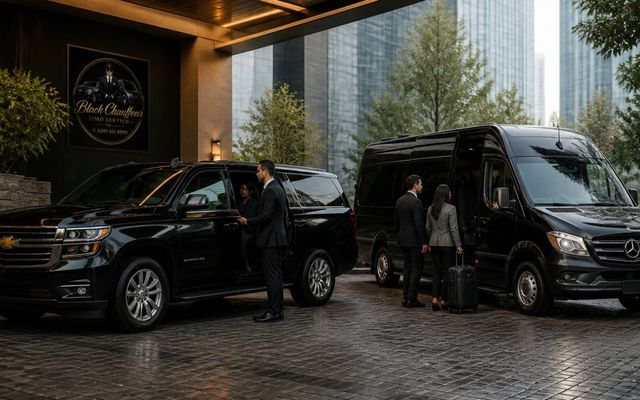
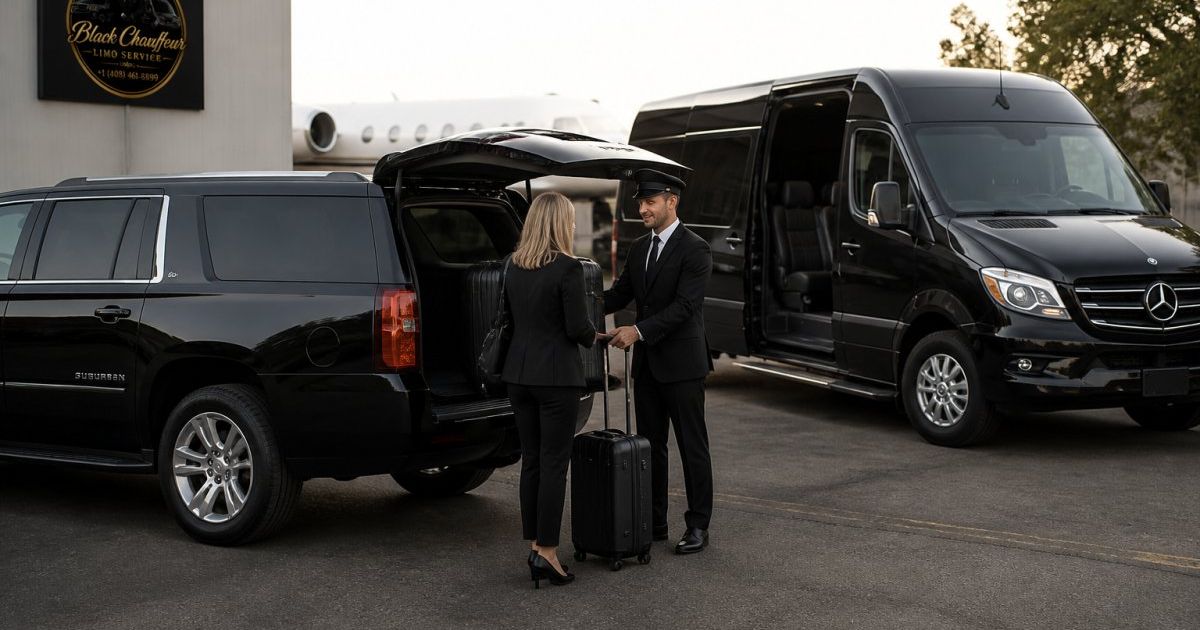
Black Chauffeur Limo Service’s direct fleet includes the Lincoln Aviator for up to 3 passengers, Chevrolet Suburban LT for up to 6, and Mercedes-Benz Sprinter passenger tiers covering up to 6, 7–10, or 11–14.
These passenger limits do not establish luggage capacity or the availability of separate vehicles for every tier. The actual vehicle, seating arrangement, equipment load, and availability must be reviewed together.
Compare the SUV and Sprinter passenger options before assigning attendees.
Do not fill a vehicle to its published passenger maximum and assume presentation cases or airport suitcases will also fit. Include belongings in the assignment from the beginning.
Test the Pickup Schedule Before Sharing It
A vehicle making repeated trips needs time to complete the entire cycle. Count the return drive and next boarding period, not just the journey carrying passengers.
Use this planning sequence:
- Boarding at the pickup location
- Travel to the venue
- Unloading
- Return travel for the next group
- Repositioning and an operating allowance
Then check whether the next departure still meets the event deadline.
Worked example: two pickup waves
Suppose one confirmed vehicle has eight usable passenger places for the proposed load, and 16 attendees require transportation.
For illustration, assume:
- Boarding takes 10 minutes.
- Travel to the venue takes 20 minutes.
- Unloading takes 5 minutes.
- Returning to the pickup takes 20 minutes.
- Repositioning and an operating allowance take 5 minutes.
That produces a 60-minute interval between departures under these assumptions.
If the first group departs at 8:20 a.m., the next departure would be around 9:20 a.m. The second group would reach the venue around 9:40 a.m., before unloading.
That arrangement would not meet a 9:15 a.m. arrival deadline for everyone.
The organizer would need to review an earlier first wave, another confirmed vehicle assignment, a suitable larger vehicle, or another workable arrangement. Adding a vehicle is not an automatic requirement or a promise of availability.
These figures illustrate the calculation; they are not Campbell travel estimates. Review actual addresses, traffic allowances, vehicle requirements, and venue opening times before using a schedule.
Check the consequences of earlier departures
An earlier first wave may solve the vehicle schedule but leave guests waiting at a venue that has not opened. Confirm that the receiving location can accommodate them.
A schedule works only when the transportation and event arrangements fit together.
Confirm Campbell Entrances and Separate Airport Arrivals
Campbell pickups may involve The Pruneyard, Downtown Campbell, a hotel, an office, or a private event property. Each needs an actual address and entrance instruction.
Ask the property:
- Where should the vehicle load and unload?
- Is the guest entrance different from the navigation address?
- Can the selected vehicle use the driveway?
- Are there clearance, turning, or stopping restrictions?
- Does the chauffeur need a host or organizer contact?
- Is there an alternative approved meeting point?
Our Campbell transportation and destination guide provides local service context. Confirm entrance arrangements directly with the receiving property.
Treat airport arrivals as separate movements
Guests landing at SJC, SFO, OAK, or MRY should have their airport journey reviewed before being added to a hotel-to-event pickup.
Landing time is different from passenger readiness. Baggage collection, arrival procedures, and the onward drive can affect whether a guest can join a particular departure.
Use the airport transfer planning resources to prepare flight and meeting details.
Provide a realistic fallback when an arriving guest cannot reach the group’s departure in time. Any separate transfer or additional vehicle requires acceptance and confirmation.
Manage Boarding, Changes, and Event-Day Communication
Name one lead coordinator who can approve transportation changes, along with a backup. A group leader at each boarding location can help check attendance without creating several competing instructions.
Share a concise passenger message containing:
- Pickup address and entrance
- Time to be ready for boarding
- Scheduled departure time
- Group contact
- Destination
- Instructions for reporting a delay
Keep personal details and the complete passenger list limited to the people who need them.
Use a simple departure log
For each movement, the coordinator should be able to record:
- Guests accounted for
- Boarding started
- Vehicle departed
- Arrival reported
- Return arrangements confirmed
This gives the organizer a practical view of who has moved and who still needs assistance.
Agree on the response to a late guest
Discuss the decision process before event day. The coordinator should contact the provider before holding a vehicle, changing the pickup order, or requesting another stop.
A delayed departure can affect later assignments. Extra waiting, an extension, or another vehicle may depend on availability and additional charges.
Passengers should communicate with the designated contact rather than independently sending conflicting route instructions.
Review the Quote and Confirm the Complete Return Plan
Choose the service arrangement around the actual movements.
Point-to-point service can suit a defined pickup and destination. Hourly service may suit a vehicle retained for an accepted period or several planned movements. Repeated trips and standby must be specifically included in the reservation.
Use our group and hourly pricing guides for planning, then compare quotes using the same itinerary.
Check:
- Vehicle category and number of assignments
- Accepted passenger and equipment load
- Pickup locations and departure times
- Reserved hours and any minimum period
- Waiting, additional stops, and extension charges
- Parking, tolls, and applicable facility fees
- Cancellation and change conditions
- The complete evening return
Review the reservation terms and conditions alongside the written quote.
Plan departures after the event
Guests may leave at different times or return to different hotels. Record those requirements rather than assuming one final pickup suits everyone.
If the vehicle is expected to remain available during the event, confirm that reserved period. A morning transfer does not automatically include afternoon standby or an evening return.
Send one final version
Before travel, reconcile the passenger list, addresses, vehicle assignments, arrival deadlines, and contacts. Identify the current version and distribute changes through the lead coordinator.
Black Chauffeur Limo Service is based in Milpitas and serves Campbell and the surrounding Silicon Valley with pre-arranged transportation.
Reserve 12–24 hours ahead whenever possible, and earlier for events requiring several vehicles or complex pickup schedules. For a pickup less than 12 hours away, call +1 (408) 461-8899 directly; service depends on vehicle and chauffeur availability.
Submit the complete plan through our business-event transportation reservation page, or text or WhatsApp +1 (408) 394-3575.
A request or preliminary quote is not a confirmed reservation until the company accepts it and provides confirmation.
How can you plan your chauffeur transportation?
Frequently asked questions
- How far in advance should you book group transportation for an event?
- Reserve 12–24 hours ahead whenever possible, and earlier for multiple vehicles, complex pickup schedules, holidays, or major events. Provide passenger counts, equipment, addresses, arrival deadlines, and return requirements. For a pickup less than 12 hours away, call +1 (408) 461-8899 directly. Vehicle and chauffeur availability must be confirmed.
- How many passengers can a Mercedes-Benz Sprinter accommodate?
- Black Chauffeur Limo Service offers Sprinter passenger tiers covering up to 6, 7–10, or 11–14 passengers. Confirm the actual seating arrangement and luggage space for your itinerary. The tiers do not represent a promise that separate vehicles are available for each range. Presentation cases, suitcases, and other equipment must be reviewed alongside passengers.
- How do you coordinate multiple pickups for a corporate event?
- Assign passengers to each pickup and record the address, entrance, boarding time, destination, and required arrival time. Test the complete vehicle cycle, including unloading and return travel before another pickup. Name a lead coordinator and backup, share one current schedule, and obtain confirmation of the vehicle assignments and return arrangements.
- Can group transportation accommodate multiple stops?
- Multiple stops can be requested when the complete itinerary is reviewed and accepted. Provide every address, passenger change, expected stop duration, and final destination before booking. Confirm the service period, waiting arrangements, and additional charges. Changes during the event require coordination and may depend on vehicle and chauffeur availability.