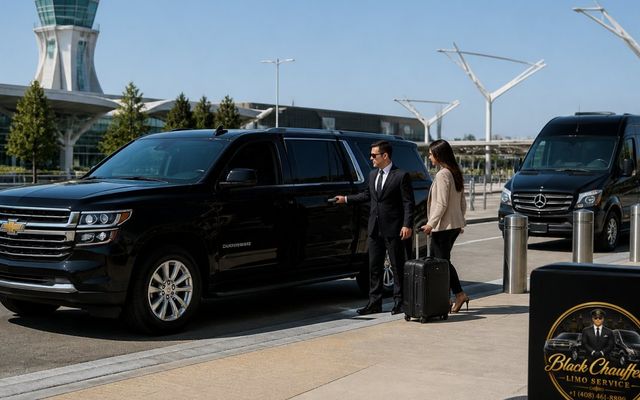
Corporate Executive Travel Logistics: 2026 Guide

Quick answer
Corporate executive travel logistics is the advance coordination of airport transfers, meetings, roadshows, vehicles, travelers and schedule changes. An effective plan gives executive assistants and travel coordinators one confirmed itinerary, appropriate vehicle capacity, flight-aware pickup timing, direct communication and contingency options.
Table of Contents
- What Is Corporate Executive Travel Logistics?
- Why Executive Travel Requires a Dedicated Strategy
- The Core Framework for Managing Executive Travel
- Duty of Care and Traveler Safety Planning
- Executive Airport Transfer Best Practices
- Outsourced Executive Transportation vs. an In-House Fleet
- Planning Corporate Roadshows Across Silicon Valley
- Managing Group Transportation for Corporate Events
- Private Aviation and FBO Transfer Planning
- Travel Technology and Schedule Visibility
- Post-Trip Expense Reconciliation
- Building a Resilient Executive Travel Plan
- Corporate Executive Travel Logistics Checklist
- Coordinate Executive Transportation Across Silicon Valley
Last updated: September 8, 2026
Corporate executive travel logistics requires more than reserving a vehicle. It brings transportation, flight information, meeting schedules, travelers, luggage, communication and contingency planning into one coordinated process.
For executive assistants, travel coordinators, chiefs of staff and office managers, the objective is straightforward: move executives and corporate guests between airports, hotels, offices, private aviation facilities and events without requiring the traveler to manage every operational detail.
This 2026 guide explains how to coordinate executive ground transportation throughout Silicon Valley, San Francisco, the Peninsula and the greater Bay Area while preserving schedule flexibility, passenger privacy and a clear chain of communication.
When your executive itinerary is ready, enter the exact pickup location, destination, date, time, passenger count and preferred vehicle to check an instant price and book your transportation.
What Is Corporate Executive Travel Logistics?
Corporate executive travel logistics is the advance coordination of transportation, timing, travelers, luggage, destinations and schedule changes for executives and corporate guests.
An effective executive ground transportation plan establishes:
- Who is traveling
- The exact pickup and destination locations
- The flight, meeting or event controlling the schedule
- The vehicle required for the passengers and luggage
- The person authorized to change the itinerary
- The communication procedure for the day of travel
- The contingency plan if the schedule changes
The most effective programs treat executive travel as a connected operation rather than a series of unrelated reservations. An airport arrival, hotel stop, board meeting and executive dinner may be separate transfers, but they belong to one coordinated itinerary.
This connected approach gives the travel coordinator better visibility while reducing the number of decisions the executive must make during the trip.
Why Executive Travel Requires a Dedicated Strategy
A delayed flight, incorrect pickup location or unrealistic transfer schedule can result in a missed investor meeting, delayed conference appearance or strained client relationship.
Executive travel often involves deadlines that cannot be treated casually, including:
- Board and investor meetings
- Client presentations
- Corporate roadshows
- Private aviation departures
- International flights
- Technology campus visits
- Convention appearances
- Executive dinners and hospitality events
- Multi-city business itineraries
A dedicated transportation strategy should prioritize:
- Accurate pickup locations and telephone numbers
- Realistic travel and passenger-loading time
- Appropriate passenger and luggage capacity
- Flight-aware airport coordination
- Direct day-of-travel communication
- Discreet, professional service
- One clearly identified decision-maker
- Contingency time for traffic and schedule changes
Regional knowledge is particularly important in the San Francisco Bay Area. Traffic on US-101, Interstate 280, Interstate 880 and Bay Area bridges can materially affect transportation between San Francisco, SFO, Silicon Valley and the East Bay.
Major conventions, stadium events, technology conferences and weekday commute patterns should also be considered when determining pickup times.
The Core Framework for Managing Executive Travel
A practical corporate executive travel framework has four stages: traveler intake, itinerary development, operational confirmation and day-of-travel monitoring.
Collect the Essential Traveler Information
A corporate transportation reservation should contain more than the passenger’s name and pickup time.
Collect the following information:
- Traveler’s full name
- Traveler’s mobile telephone number
- Executive assistant or coordinator contact
- Airline and flight number, when applicable
- FBO and aircraft information, when applicable
- Exact pickup address
- Specific building entrance or terminal
- Destination address
- Required arrival time
- Passenger count
- Number and approximate size of bags
- Requested vehicle
- Additional stops
- Accessibility or child-seat requirements
- Curbside or meet-and-greet preference
- Billing or cost-center instructions
- Authorized schedule-change contact
Only information necessary to coordinate the trip should be shared with the transportation provider.
Complete information helps the reservation team select the proper vehicle, develop practical timing and provide the chauffeur with accurate instructions.
Build One Master Itinerary
Create one approved itinerary containing every confirmed movement. Avoid distributing conflicting versions through separate email or messaging threads.
For each transportation segment, record:
- Local pickup date and time
- Exact pickup point
- Destination
- Required arrival time
- Primary traveler
- Passenger count
- Vehicle assignment
- Reservation confirmation number
- Chauffeur or dispatch communication procedure
- Planned schedule buffer
- Relevant special instructions
The required arrival time should determine the pickup time—not the traveler’s preferred departure time alone.
For example, an executive who must reach a Palo Alto meeting at 9:00 a.m. should not receive a pickup time based solely on the average driving time. The schedule should also account for traffic, passenger loading, building access and a reasonable arrival margin.
Match the Vehicle to the Travelers
Passenger capacity and luggage capacity must be considered together. A vehicle may accommodate the listed number of passengers without accommodating the same number of travelers carrying large suitcases, presentation materials or event equipment.
Black Chauffeur Limo Service offers:
- Lincoln Aviator: appropriate for individual executives and smaller parties
- Chevrolet Suburban LT: accommodates up to six passengers and up to six suitcases
- Mercedes-Benz Sprinter: available in configurations for 6 passengers, 7–10 passengers and 11–14 passengers
Review the complete executive chauffeur fleet before confirming group transportation.
The final vehicle selection should be based on the actual passenger count, luggage volume, trip purpose and requested level of flexibility.
Confirm the Operational Details
The final reservation confirmation should clearly identify:
- Confirmed date and local pickup time
- Exact pickup location
- Destination
- Vehicle class
- Passenger contact
- Coordinator contact
- Included and optional services
- Applicable waiting-time terms
- Cancellation and change requirements
- Day-of-travel communication instructions
Complex itineraries should be reconfirmed before the first movement, especially when they involve multiple travelers, vehicles, hotels, flights or meeting locations.
Duty of Care and Traveler Safety Planning
Duty-of-care planning involves taking reasonable steps to support employees’ safety and well-being while they travel for business.
Company procedures may include:
- Transportation-provider review
- Traveler check-in procedures
- Emergency contacts
- Destination-risk assessment
- Communication expectations
- Escalation instructions
- Alternative airport or hotel planning
Requirements vary according to the organization, destination and nature of the trip.
A ground transportation provider can be evaluated according to appropriate licensing, commercial insurance, professional chauffeur standards, vehicle condition and its ability to communicate reservation changes.
Black Chauffeur Limo Service LLC operates pre-arranged transportation under California TCP 46320-B. Travelers and coordinators can review the company’s corporate chauffeur service, fleet information and transportation services before making a reservation.
Ground transportation remains one component of a broader travel-risk plan. A chauffeur provider is not a replacement for emergency medical assistance, law enforcement or professional protective-security services.
Travel Policy Compliance and Expense Management
A corporate travel policy should identify:
- Approved booking channels
- Permitted vehicle classes
- Spending and approval requirements
- Preferred transportation providers
- Billing procedures
- Rules for additional stops
- Procedures for itinerary changes
- Cancellation requirements
When travelers regularly bypass a corporate policy, the reservation process may be too slow or difficult. Providing a clear path to approved corporate and executive transportation can simplify compliance for executives and their assistants.
Centralized reservations may also improve billing records. Using one transportation provider for trips within the same service region can create itemized records showing the date, time, route, vehicle and authorized changes.
Companies seeking recurring transportation should confirm available account and billing arrangements with the reservation team.
Executive Airport Transfer Best Practices
Airport transfers are especially sensitive to delays, early arrivals, baggage processing, customs, terminal rules and changing traffic conditions.
For an airport arrival, provide:
- Airline and flight number
- Arrival date
- Traveler’s mobile number
- Passenger count
- Luggage count and approximate sizes
- Final destination
- Curbside or meet-and-greet preference
Flight monitoring helps a transportation provider respond to early or delayed arrivals. The traveler should still follow the communication and pickup instructions supplied with the confirmed reservation.
For departures, work backward from the airline’s recommended airport arrival time. Add sufficient time for:
- Travel from the pickup address
- Expected traffic
- Passenger and luggage loading
- Additional stops
- Airline check-in
- Security screening
- International departure procedures
Black Chauffeur Limo Service provides pre-arranged transportation for SFO, SJC, OAK, MRY and Bay Area private aviation facilities.
Travelers using San Francisco International Airport can review the SFO chauffeur pickup guide. Those traveling through San José Mineta International Airport can review the SJC airport transportation guide.
Whenever possible, reserve 12–24 hours in advance. Additional notice is beneficial for Mercedes-Benz Sprinter vans, conferences, roadshows, private aviation transfers and multi-vehicle assignments.
Outsourced Executive Transportation vs. an In-House Fleet
The decision between outsourced transportation and an in-house fleet depends on trip frequency, staffing, operating costs, management requirements and acceptable risk.
An in-house fleet requires responsibility for:
- Vehicle acquisition
- Commercial insurance
- Driver recruitment and scheduling
- Vehicle maintenance and cleaning
- Regulatory compliance
- Backup vehicles
- Backup drivers
- Administrative oversight
Outsourced executive transportation uses a pay-per-reservation or contracted model and transfers many operational responsibilities to the selected provider.
This model can be practical for companies that need professional vehicles periodically without maintaining their own transportation department.
The correct choice depends on the organization’s travel volume, internal resources and need for vehicle availability. For a detailed comparison, read Outsourced Executive Transport vs. In-House Fleet.
Planning Corporate Roadshows Across Silicon Valley
A corporate roadshow requires greater coordination than a single point-to-point ride because every meeting affects the next movement.
Common regional roadshow destinations include:
- Downtown San Francisco and Moscone Center
- Sand Hill Road and Menlo Park
- Palo Alto and Stanford
- Googleplex and Mountain View
- Sunnyvale and Moffett Park
- Apple Park and Cupertino
- NVIDIA and Santa Clara
- Downtown San Jose and its convention district
- Hotels and offices throughout the Peninsula
Begin with the required arrival time for every appointment. Add realistic meeting-release time, walking time, passenger loading and traffic buffers.
The working itinerary should identify:
- Every meeting address
- The correct building entrance
- Host or receptionist contact
- Required arrival time
- Planned departure time
- Loading or parking limitations
- Meal and comfort breaks
- Presentation or equipment requirements
- An alternative route or meeting sequence
- One person authorized to approve changes
One coordinator should manage ground transportation instructions. This prevents the chauffeur from receiving conflicting directions from several passengers.
Hourly, as-directed chauffeur service may be practical when the vehicle and chauffeur must remain available between meetings. Review sample transportation pricing or check an exact itinerary online.
Schedule Assurance for Executive Assistants
Schedule assurance is the process of reviewing the entire transportation chain before a preventable problem reaches the traveler.
Twenty-Four Hours Before Travel
- Verify the flight number and arrival date
- Reconfirm passenger and luggage counts
- Check meeting addresses
- Confirm the selected vehicle
- Review significant traffic or event conditions
- Distribute the approved itinerary
Before Chauffeur Dispatch
- Recheck flight status
- Confirm the pickup location
- Verify the traveler’s telephone number
- Review curbside or meet-and-greet instructions
- Confirm requested stops
During the Trip
- Keep one coordinator available
- Direct changes through the authorized contact
- Update later destinations when the schedule changes
- Avoid sending conflicting instructions
After the Trip
- Reconcile the itinerary with the final invoice
- Record approved schedule changes
- Note useful traveler and vehicle preferences
- Retain necessary records according to company policy
This centralized support is especially valuable for executive assistants and travel coordinators managing airport transfers, meetings, schedule changes and consolidated billing.
Managing Group Transportation for Corporate Events
Corporate group transportation introduces additional variables, including multiple arrival times, luggage, hotel assignments, attendee manifests and venue access.
Before selecting a Sprinter or multiple vehicles, determine:
- Final passenger count
- Luggage and equipment volume
- Whether the group must remain together
- Number of pickup locations
- Accessibility requirements
- Venue loading restrictions
- On-site transportation contact
- Whether return transportation is fixed or flexible
A Mercedes-Benz Sprinter with professional chauffeur service can keep teams together for airport arrivals, conferences, off-site meetings and executive dinners.
Available Sprinter configurations include:
- 6 passengers
- 7–10 passengers
- 11–14 passengers
For smaller executive groups, the Chevrolet Suburban LT accommodates up to six passengers and up to six suitcases, subject to the actual size and type of luggage.
For a multi-vehicle program, assign each vehicle a passenger list and one group leader. Avoid asking several attendees to direct the same chauffeur independently.
Private Aviation and FBO Transfer Planning
Private aviation transportation should be coordinated using the facility name, aircraft tail number when available, expected arrival time, passenger count and location-specific instructions.
Do not rely only on the commercial airport code. SJC, SFO and OAK include private aviation facilities with separate entrances and pickup procedures.
Black Chauffeur Limo Service coordinates pre-arranged transportation for locations including:
- Signature Aviation SJC
- Atlantic Aviation SJC
- Signature Aviation SFO
- Signature Aviation Oakland
- Moffett Field
- San Carlos Airport-area private aviation facilities
Notify the reservation team promptly if the aircraft schedule, passenger count or pickup facility changes.
Review private aviation and FBO transportation when coordinating an executive arrival or departure.
Travel Technology and Schedule Visibility
Travel technology can reduce administrative work, but it should support—not replace—accurate human review and communication.
Traveler and Preference Management
Travel-management systems can store approved preferences, frequent destinations, vehicle requirements and billing information. This can simplify repeat reservations while reducing data-entry errors.
Sensitive traveler information should be collected and retained according to the organization’s privacy and data-security policies.
Flight and Schedule Monitoring
Flight-tracking tools can alert transportation providers and travel coordinators to early arrivals, delays, cancellations and terminal changes.
When a flight changes, the coordinator should:
- Confirm the traveler’s revised plan.
- Notify the transportation provider.
- Reconfirm the pickup time and location.
- Update later meetings or transfers.
- Distribute one approved itinerary revision.
Technology may produce alerts or suggested alternatives, but a coordinator should verify important changes before acting on them.
Vehicle Status Communication
Where available, trip-status information can help a coordinator determine whether the assigned chauffeur is progressing toward the pickup.
The transportation provider should explain what communication is available and who is permitted to receive it.
Post-Trip Expense Reconciliation
A structured post-trip process can improve financial accuracy and future planning.
1. Review the Trip Record
Compare the completed transportation with the approved itinerary, including:
- Date and pickup time
- Route
- Vehicle
- Additional stops
- Waiting time
- Authorized changes
2. Review Travel-Policy Compliance
Identify charges requiring additional documentation or management approval.
3. Allocate the Expense
Assign transportation costs to the appropriate traveler, department, event, client or project.
4. Update Traveler Preferences
Record useful operational preferences, such as:
- Preferred vehicle
- Typical pickup entrance
- Communication preference
- Luggage requirements
- Preferred schedule buffer
5. Review Exceptions
Identify delays, address errors or communication problems that should be corrected before the next reservation.
The objective is not simply to close the expense report. It is to improve the next executive itinerary.
Building a Resilient Executive Travel Plan
A resilient travel plan establishes practical procedures for ordinary delays, significant disruptions and genuine emergencies.
Pre-Trip Review
Before travel, review:
- Destination conditions: Consider weather, major events and known access limitations.
- Emergency resources: Follow the organization’s procedures for medical and emergency contacts.
- Transportation conditions: Review realistic routes and alternative airports.
- Communication: Confirm how the traveler, coordinator and transportation provider will exchange updates.
- Authority: Identify who may approve itinerary changes or additional costs.
For international travel, coordinators should review current government travel advisories and follow their organization’s established travel-risk policies.
Minor Disruptions
Examples include an ordinary flight delay, early arrival or meeting running late.
Recommended response:
- Notify the transportation provider
- Confirm the revised pickup time
- Update the next destination
- Communicate the change to the traveler
Significant Disruptions
Examples include a canceled flight, severe weather or widespread airport delays.
Recommended response:
- Identify the coordinator authorized to revise the itinerary
- Confirm the traveler’s current location
- Review alternative flight or hotel arrangements
- Determine whether another Bay Area airport is practical
- Reconfirm ground transportation after the revised plan is established
Emergencies
For a medical or safety emergency, contact the appropriate emergency services and follow the organization’s established response procedures.
A chauffeur provider may support transportation changes, but it is not a substitute for emergency medical assistance, law enforcement or professional protective-security services.
Corporate Executive Travel Logistics Checklist
Before submitting an executive transportation reservation, confirm:
- Correct date and local pickup time
- Exact pickup and destination addresses
- Correct building entrance or terminal
- Required arrival time
- Airline and flight number, when applicable
- FBO and tail number, when applicable
- Passenger name and mobile number
- Executive assistant or coordinator contact
- Passenger count
- Luggage count and approximate sizes
- Requested vehicle
- Additional stops
- Curbside or meet-and-greet preference
- Accessibility or child-seat requirements
- Billing instructions
- Authorized schedule-change contact
- Appropriate contingency time
Related Corporate Travel Resources
For additional planning resources operated by Black Chauffeur Limo Service LLC, explore corporate and executive chauffeur service, Silicon Valley corporate travel accounts, executive SFO airport transportation, SJC corporate transportation and private executive chauffeur services.
Coordinate Executive Transportation Across Silicon Valley
Black Chauffeur Limo Service provides pre-arranged corporate airport transfers, executive meeting transportation, hourly chauffeur service, corporate roadshow support and Sprinter group transportation throughout Silicon Valley and the San Francisco Bay Area.
Review the corporate chauffeur service, compare executive fleet options, check sample transportation pricing, or enter your itinerary for an instant price and availability.
For reservation assistance, call +1 (408) 461-8899 or text or WhatsApp +1 (408) 394-3575.
How can you plan your chauffeur transportation?
Frequently asked questions
- What are the main responsibilities of managing executive travel logistics?
- Executive travel logistics includes collecting accurate traveler information, building a coordinated itinerary, arranging airport and meeting transportation, selecting the appropriate vehicle, communicating pickup instructions, monitoring schedule changes and preparing contingency options.
- How far in advance should executive ground transportation be booked?
- Booking 12–24 hours ahead is recommended whenever possible. Corporate roadshows, private aviation transfers, Mercedes-Benz Sprinter reservations, conferences and multi-vehicle assignments may require additional notice. All reservations remain subject to confirmation and vehicle availability.
- What information is needed to arrange executive transportation?
- Provide the travel date, pickup time, exact addresses, required arrival time, passenger contact, passenger and luggage counts, requested vehicle and any additional stops. For airport travel, include the airline and flight number. For private aviation, provide the FBO and aircraft tail number when available.
- How should an executive assistant plan a multi-stop corporate roadshow?
- Create one master itinerary containing every address, meeting contact, required arrival time and realistic travel buffer. Assign one coordinator to authorize changes and consider hourly chauffeur service when the vehicle must remain available between meetings.
- Which vehicle is best for corporate executive transportation?
- The Lincoln Aviator is appropriate for individual executives and smaller parties. The Chevrolet Suburban LT accommodates up to six passengers and six suitcases. Mercedes-Benz Sprinter configurations are available for 6 passengers, 7–10 passengers and 11–14 passengers. Passenger and luggage requirements should always be confirmed together.
- Can executive airport transportation accommodate delayed flights?
- Flight monitoring helps the transportation provider respond to early or delayed arrivals. The traveler or coordinator should still maintain direct communication and follow the pickup instructions provided with the confirmed reservation.
- Does Black Chauffeur Limo Service provide corporate transportation throughout the Bay Area?
- Yes. Black Chauffeur Limo Service provides pre-arranged corporate airport transfers, executive meeting transportation, roadshow support, hourly chauffeur service and group transportation throughout Silicon Valley, San Francisco, the Peninsula, the East Bay and surrounding Bay Area destinations, subject to reservation confirmation and vehicle availability.