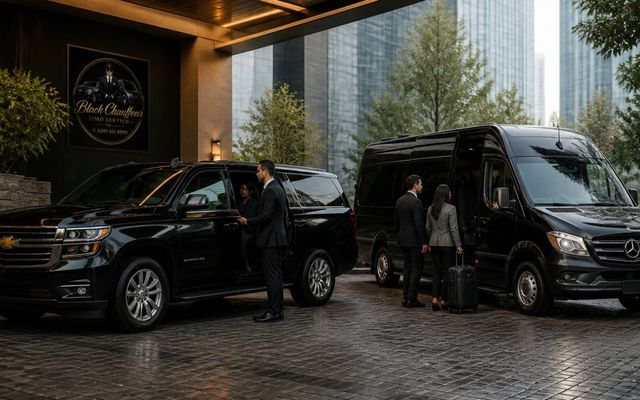
Hybrid Corporate Transportation: Combining In-House Vehicles and Chauffeur Service

Quick answer
A hybrid corporate transportation model combines company-managed vehicles and drivers with an outside transportation provider. It can help companies retain internal service for predictable trips while requesting chauffeur transportation for other accepted journeys. Define which trips each team handles, who approves bookings, and how schedule changes are communicated. Cost savings depend on actual utilization and complete operating costs; outside vehicle and chauffeur availability must be confirmed for each reservation.
Table of Contents
- Define What Each Transportation Team Handles
- Assign Trips Using Clear Booking Rules
- Coordinate Airport and Private Aviation Handoffs
- Confirm Outside Capacity Before Relying on It
- Compare Costs Without Assuming Savings
- Keep Approvals and Schedule Changes Organized
- Pilot the Arrangement and Review Results
- Request Corporate Chauffeur Transportation
A company does not have to assign every business journey to the same transportation team. A hybrid corporate transportation model combines company-managed vehicles and drivers with an outside chauffeur provider for specifically agreed trips.
The practical question is how to divide responsibilities. Internal staff need to know which journeys they handle, when to request outside transportation, and who confirms the handoff.
This guide focuses on operating that combined arrangement. Here, “hybrid” describes the transportation management model, not a vehicle’s fuel or powertrain.
Define What Each Transportation Team Handles
Start by documenting the work your internal vehicles and drivers already perform. Identify predictable journeys, operating hours, passenger requirements, and periods when demand exceeds the accepted internal schedule.
An outside provider might be considered for selected airport arrivals, visiting clients, group movements, or trips outside the internal team’s agreed coverage.
These are requests to review, not automatically available backup services.
Before allocating trips, establish:
- The internal team’s accepted responsibilities
- Trip types that may be requested externally
- Who decides which team receives each journey
- The information required before a booking can be accepted
- What happens when neither team can accommodate a request
If your company is still deciding whether to operate its own vehicles, read the separate in-house fleet and outsourced transportation comparison.
Assign Trips Using Clear Booking Rules
Use practical booking rules rather than sending every difficult or last-minute request to an outside provider.
For example, an internal driver might handle a recurring office journey while an independently confirmed chauffeur reservation covers a visiting client’s airport arrival. The allocation should reflect actual availability, vehicle suitability, and company approval.
A simple assignment guide can distinguish:
- Recurring journeys already accepted by the internal team
- Trips requiring a different passenger or luggage arrangement
- Simultaneous journeys the internal schedule cannot accommodate
- Travel outside the internal team’s agreed operating area or hours
- Requests requiring additional review before either team accepts them
Identify one owner for each journey. Avoid leaving both teams expecting the other to collect the passenger.
For every assigned trip, record the provider, pickup instructions, traveler contact, confirmation reference, and return requirements.
Coordinate Airport and Private Aviation Handoffs
Airport journeys need a clear boundary between the aircraft itinerary and the road reservation.
For SJC, SFO, OAK, or MRY arrivals, provide the flight number, arrival date, passenger mobile number, destination, and complete luggage details. Review the commercial airport transportation guides for the relevant journey.
If an internal vehicle handles one part of the visit and a chauffeur handles another, confirm the handoff address and timing. An airport arrival followed by a hotel stop should not be treated as an immediate office pickup.
For private aviation, use the actual receiving facility. This may include Signature Aviation SJC, Signature Aviation SFO, Signature Aviation OAK, Atlantic Aviation SJC, or an accepted operator at San Carlos Airport or Moffett Field.
Confirm the current facility name, address, host instructions, and permitted meeting point through the flight contact. Airport or facility access is separate from reserving ground transportation.
Our private aviation transfer requirements guide explains the information to prepare.
Keep one coordinator responsible for reporting flight changes to whichever transportation team is handling the affected journey.
Confirm Outside Capacity Before Relying on It
An outside provider’s vehicle listings do not establish that several vehicles and chauffeurs are available at the same time.
Request the exact dates, pickup times, passenger counts, belongings, and service periods before building the company schedule around external capacity.
Black Chauffeur Limo Service’s direct fleet includes:
- Lincoln Aviator: up to 3 passengers and 3 bags, subject to bag size and the complete load.
- Chevrolet Suburban LT: suitability depends on the actual passenger count, luggage, and seating requirements.
- Mercedes-Benz Sprinter passenger van: booking configurations for up to 6, 7–10, or 11–14 passengers, subject to actual vehicle availability and luggage fit.
The Sprinter booking ranges do not represent three separately available vans. Additional vehicle categories may be supplied through affiliates when available and disclosed.
Review the direct fleet and affiliate vehicle options, then obtain confirmation for the complete request.
A recurring schedule also needs an accepted arrangement. Do not assume that one confirmed journey reserves the same vehicle and chauffeur for every future occurrence.
Compare Costs Without Assuming Savings
A hybrid arrangement can change how transportation spending is distributed, but it does not automatically reduce the company’s total cost.
Separate costs that continue from costs the proposed arrangement would actually change.
For example, assigning several journeys externally may leave existing lease payments or employee salaries unchanged. Those expenses should not be counted as savings unless they genuinely decrease.
Compare:
- Internal staffing and vehicle expenses
- Fuel, maintenance, parking, and other operating costs
- Confirmed external trip charges
- Waiting, overtime, tolls, and applicable fees
- Coordinator time spent arranging both teams
- Cancellation or schedule-change costs
- Any overlap during the transition
Use the same travel demand and service requirements for each comparison.
If internal resources are freed for other duties, record that as a separate operational benefit unless a measurable financial saving also occurs.
Evaluate emissions separately using an appropriate, documented method. Vehicle size or fewer bookings alone does not establish an emissions reduction.
Keep Approvals and Schedule Changes Organized
The combined arrangement needs one approval process that both teams understand.
Identify who can authorize:
- An outside reservation
- A different vehicle category
- Additional stops or retained hours
- Changes to pickup times or destinations
- Cancellation or replacement arrangements
- Additional charges
Maintain one approved itinerary showing each provider’s responsibilities. When a plan changes, notify every affected team and obtain acknowledgment before relying on the revision.
For example, moving a client meeting may affect an internal office transfer and an externally booked airport departure. Updating the calendar does not confirm that either transportation team accepted the change.
Use our executive ground-itinerary management guide for organizing the trip record.
Share only the traveler information needed to perform each journey. Confirm available billing and communication arrangements rather than assuming the provider integrates with your company’s internal systems.
Pilot the Arrangement and Review Results
Start with a defined set of journeys and a review period appropriate to the company’s travel pattern.
Record the intended purpose of the pilot. It might be covering simultaneous trips, reducing coordinator confusion, or finding a suitable arrangement for visiting groups.
Review:
- Requests submitted and reservations accepted
- Journeys completed by each team
- Booking lead time
- Changes and their causes
- Passenger or luggage mismatches
- Total spending for comparable journeys
- Coordinator time and traveler feedback
Distinguish a declined request from a failure to perform a confirmed reservation. They point to different planning issues.
Use the results to revise booking rules, responsibilities, or lead times. Expand the arrangement only when the evidence supports it.
Request Corporate Chauffeur Transportation
Black Chauffeur Limo Service is based in Milpitas and reviews pre-arranged corporate transportation requests for accepted Silicon Valley and Bay Area itineraries.
Reserve 12–24 hours ahead when possible and earlier for groups, conferences, recurring schedules, or complex requirements. Availability requires both a suitable vehicle and chauffeur.
Review the reservation terms and change conditions alongside the trip-specific quote. A request or preliminary quote is not confirmed until the company accepts it and provides confirmation.
Use the corporate transportation request page to submit the schedule. Explain which journeys remain with your internal team and which trips you are asking Black Chauffeur Limo Service to review.
Call: +1 (408) 461-8899
Text and WhatsApp: +1 (408) 394-3575
How can you plan your chauffeur transportation?
Frequently asked questions
- What is a hybrid corporate transportation model?
- It is an arrangement that combines company-managed vehicles and drivers with an outside transportation provider for agreed journeys. The company defines which trips each team handles, who approves reservations, and how changes are communicated. “Hybrid” describes the management model here, not the vehicle’s powertrain.
- When should a company use its own vehicles versus a chauffeured transportation service?
- Allocate journeys according to the internal team’s accepted schedule, vehicle suitability, geography, staffing, and company policy. Outside chauffeur service may be requested for other trips, but availability and pricing must be confirmed. Avoid assigning the same journey to both teams or assuming an outside provider offers immediate backup.
- What should a corporate transportation policy include?
- Include trip-assignment rules, approved booking contacts, spending authority, required passenger and luggage information, confirmation requirements, and procedures for changes and cancellations. Identify who maintains the itinerary, handles day-of issues, reviews invoices, and evaluates the arrangement. Apply the company’s privacy and record-retention policies to traveler information.